
Representative reverse engineering case · commercial vehicles
Heavy Truck Brake Caliper Recovery: From Discontinued Casting to Manufacturing-Ready CAD Data
A discontinued imported heavy-truck brake caliper was transformed from worn physical evidence into controlled parametric CAD data suitable for tooling, CNC machining and repeat replacement-part production.
The challenge
A discontinued truck caliper put both repair and tooling at a standstill.
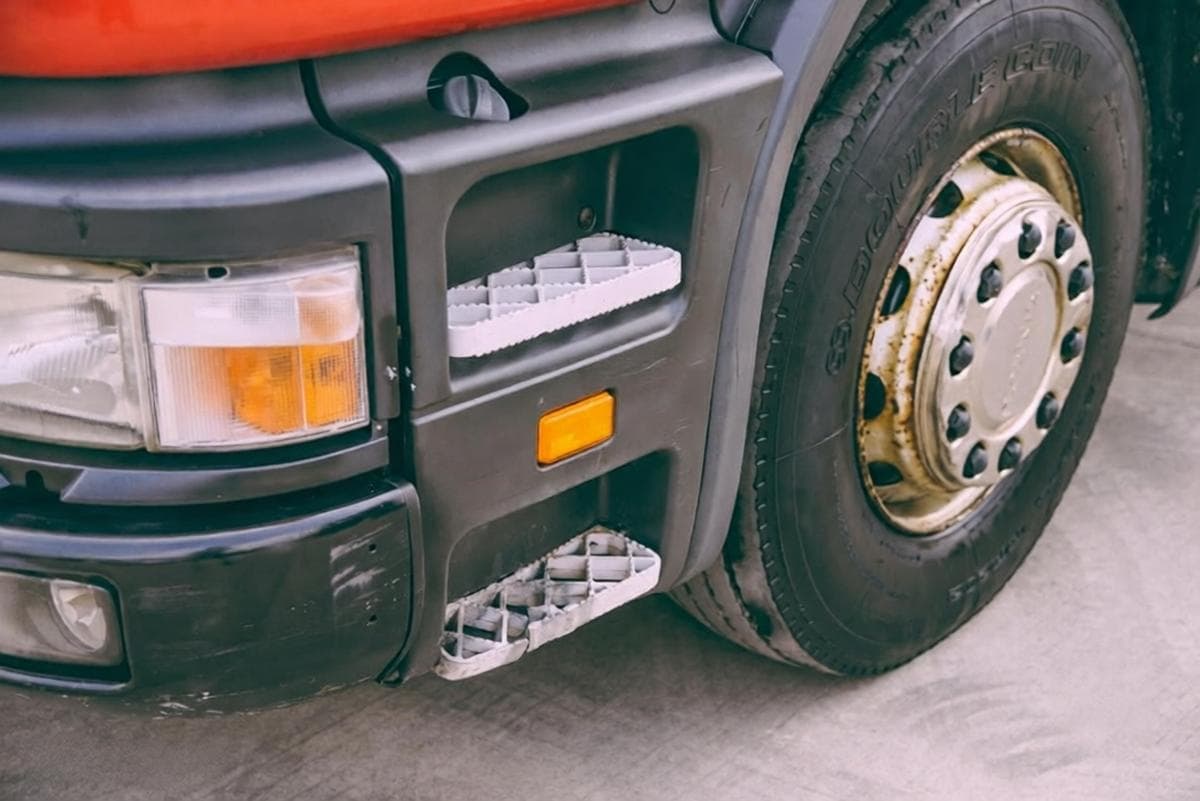
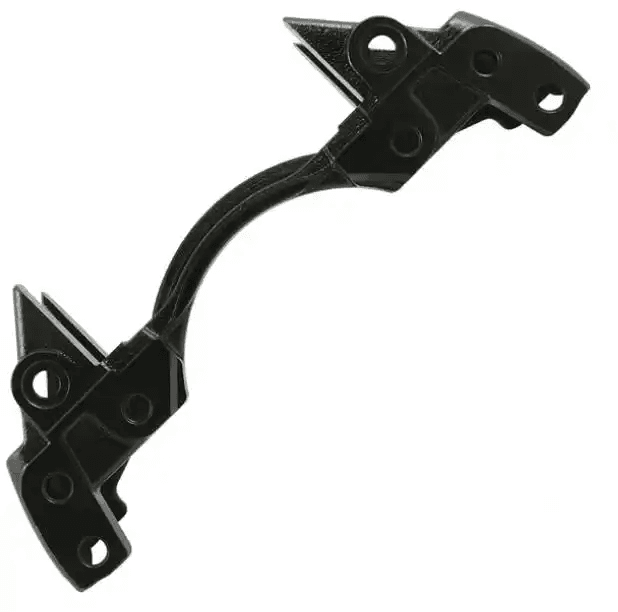
A North American heavy-truck repair business was servicing a fleet of ageing imported trucks. Inspection showed severe wear and cracking in brake-caliper cover plates and bracket bases; both components had to be replaced.
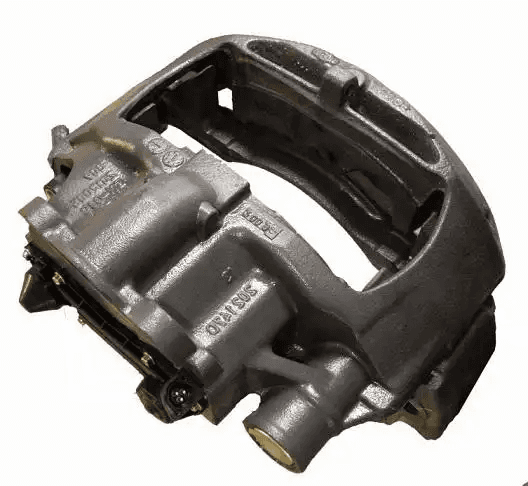
The truck model had long been discontinued, the OEM no longer supplied caliper parts, and no original 2D drawings or 3D data could be recovered. Because these are safety-critical hydraulic pressure components, the geometry could not be copied as a simple outer shell: wall thickness, structural strength, locating features and assembly interfaces all had to be controlled.
The challenge
Without reliable data, every repair route carried a safety risk.
Brake calipers apply hydraulic force to clamp brake pads onto the rotor. Heavy-truck calipers operate under far higher loads than passenger-vehicle parts, making uniform wall thickness, pressure-bearing integrity and accurate interfaces essential. The customer had to choose between abandoning the repair work or creating a controlled digital baseline for the discontinued parts.
Specification
Requirements defined around safety, fit and production.
The recovered data had to distinguish foundry variation from intentional design, protect pressure-bearing wall thickness and create a controlled interface definition for future tooling and manufacturing.
The approach
From scan evidence to manufacturing-ready CAD data.
Mechonus delivered more than a scan: a four-stage controlled reverse engineering route from physical castings through parameterised reconstruction, customer review and full-field accuracy verification.
Capture geometry through casting-surface interference
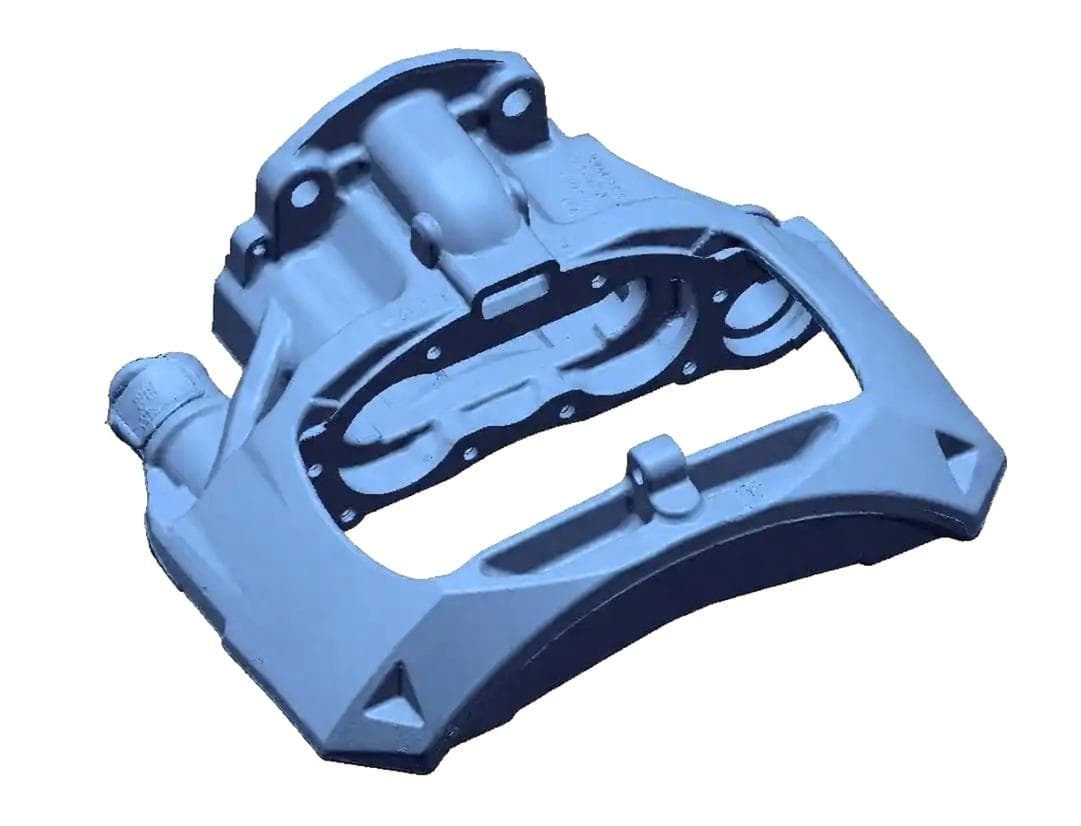
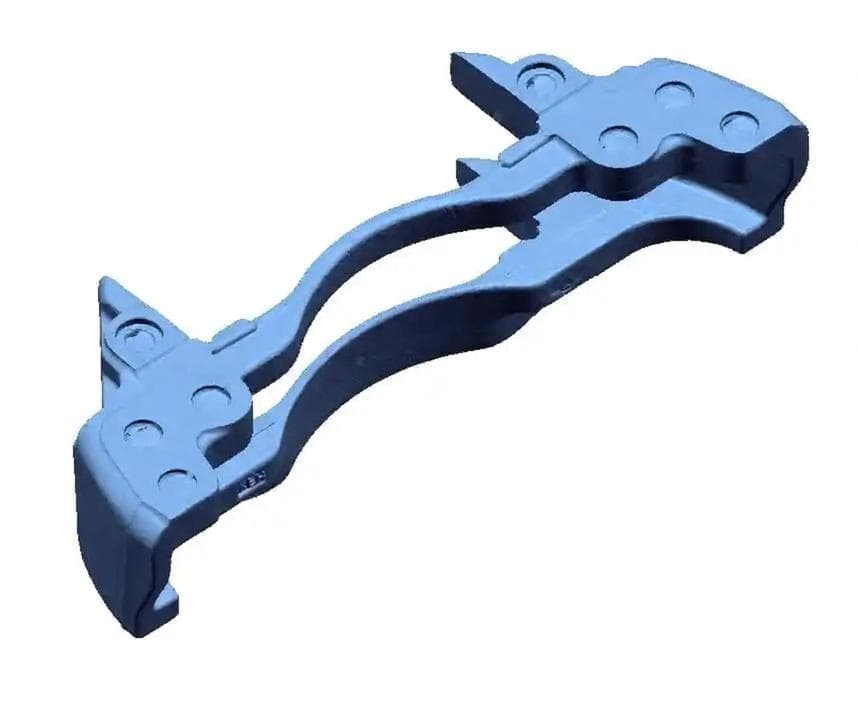
High-precision blue-light scanning captured the caliper cover and bracket base in full. The 400 × 300 × 170 mm cover included complex internal cavities and restricted areas, so the acquisition plan combined overlapping views with targeted capture of high-risk features.
- 0.01 mm-class scan capability
- 6 million+ high-density points per frame
- Point-cloud denoising, mesh optimisation and feature repair separate design structure from rough-cast variation
Rebuild parametric CAD around safety and manufacturability
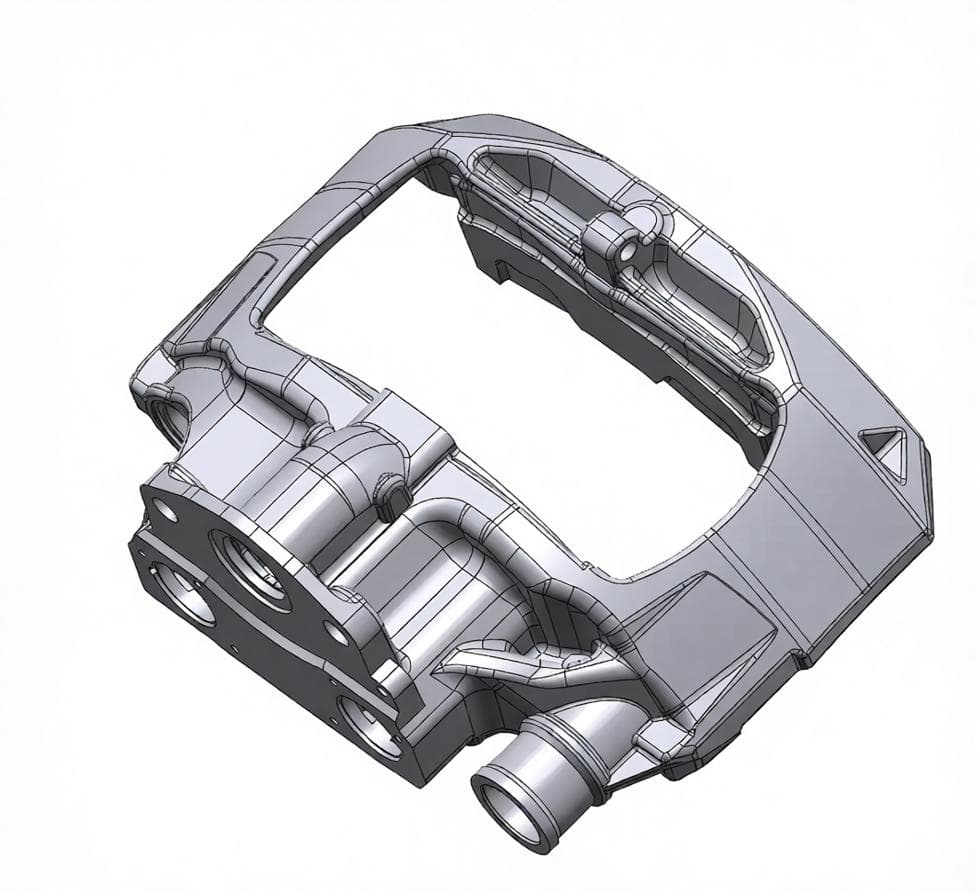
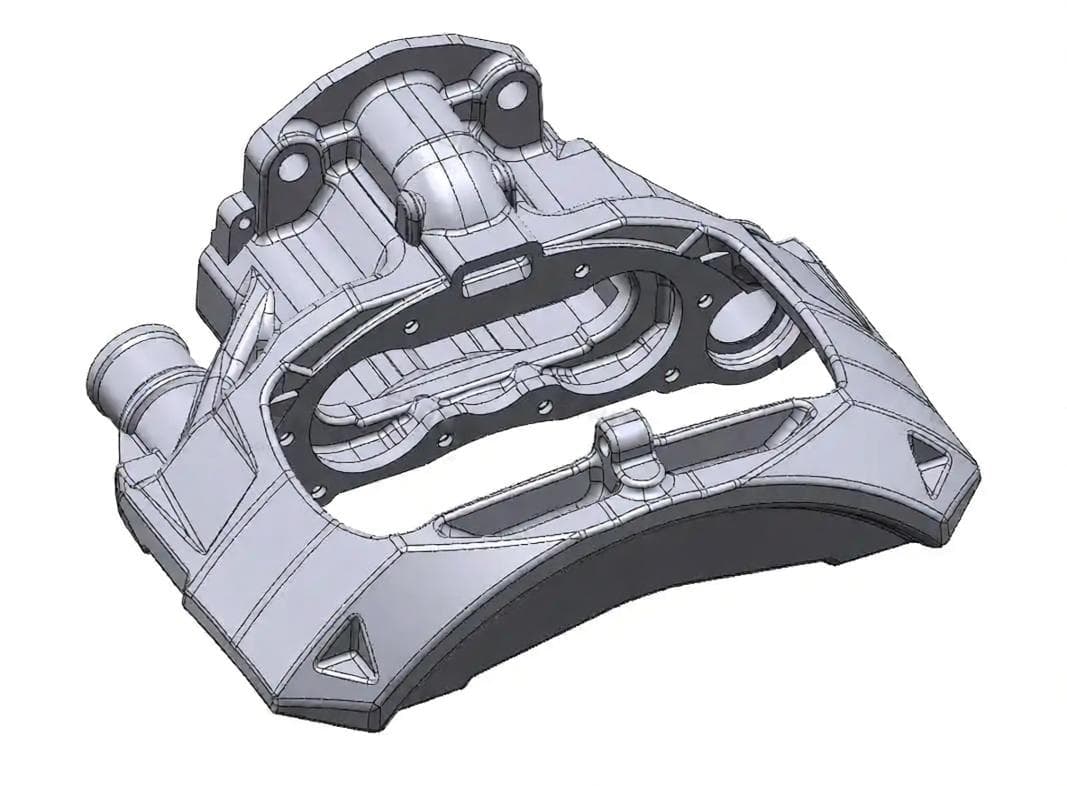
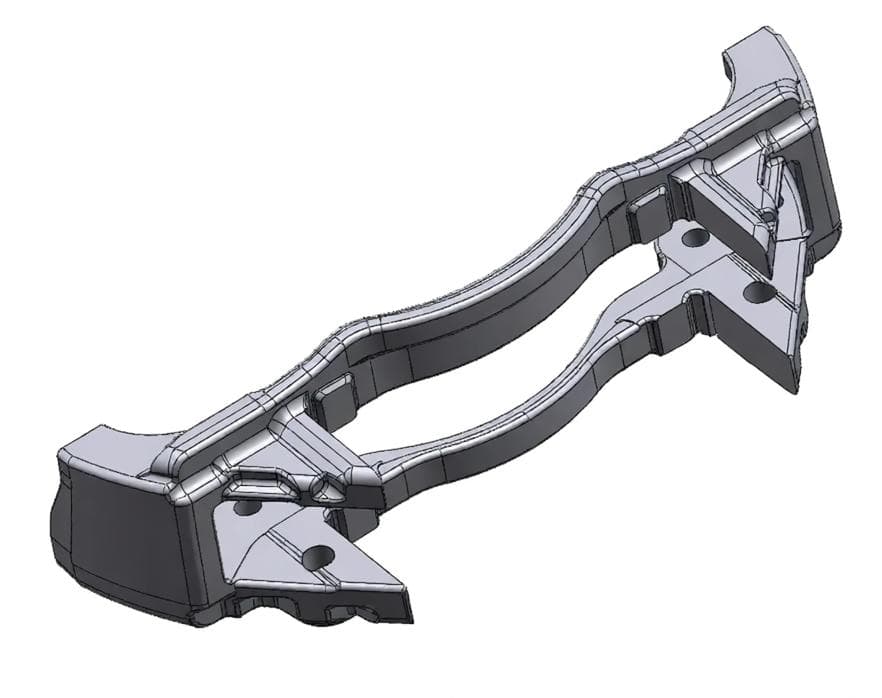
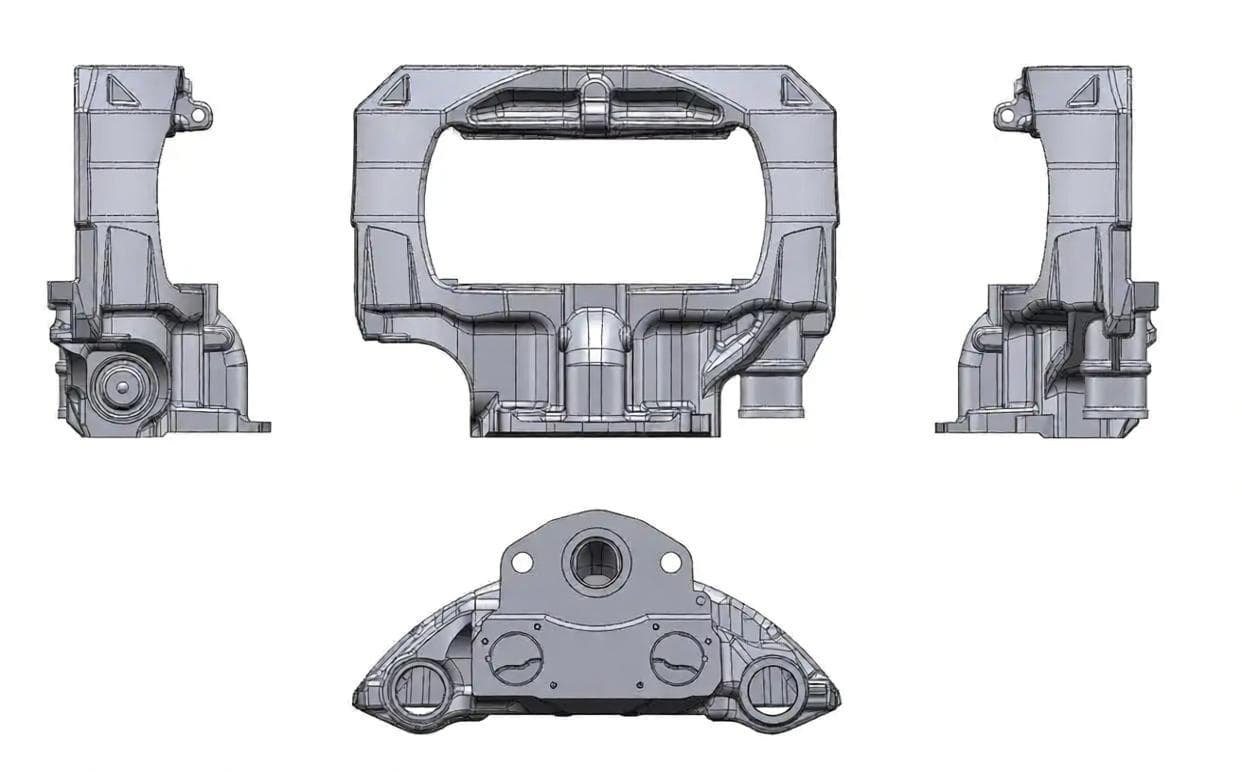
The scan mesh was evidence, not a production model. The engineering team rebuilt editable CAD around uniform wall thickness, structural strength, casting allowances and controlled assembly interfaces—restoring design intent rather than simply copying an irregular casting surface.
- Cover plate: wall-thickness control, mounting holes, locating faces and mating surfaces within ≤0.1 mm
- Casting surfaces assigned a practical 0.2–0.3 mm industrial tolerance
- Blind-zone internal features inferred from functional interfaces and mechanical design logic
- Bracket base: mounting datums, hole position and assembly parallelism controlled for stable braking performance
Obtain customer design approval before production release
The reconstructed CAD, key dimensions, GD&T and mating interfaces were issued for technical review. The data was released to the customer only after every critical interface was confirmed, keeping unrecorded assumptions out of downstream production.
- CAD and drawing technical review
- Critical interface and tolerance confirmation
- Approved revision becomes the manufacturing baseline
Verify accuracy and release manufacturing-ready data
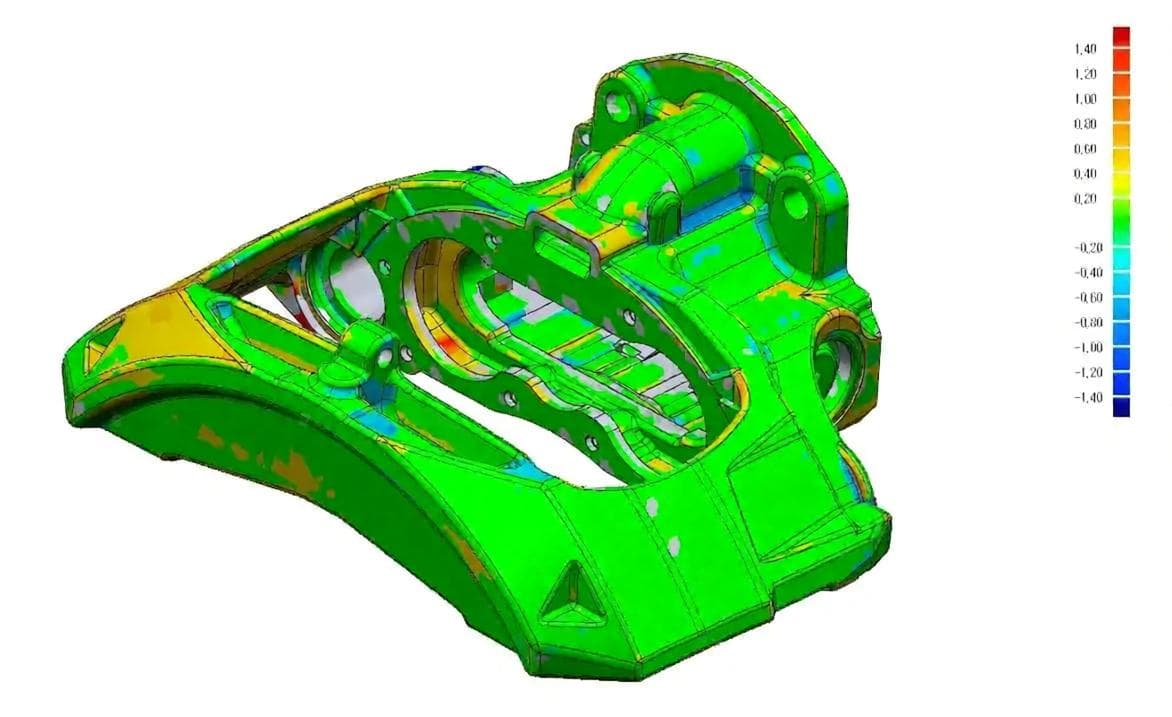
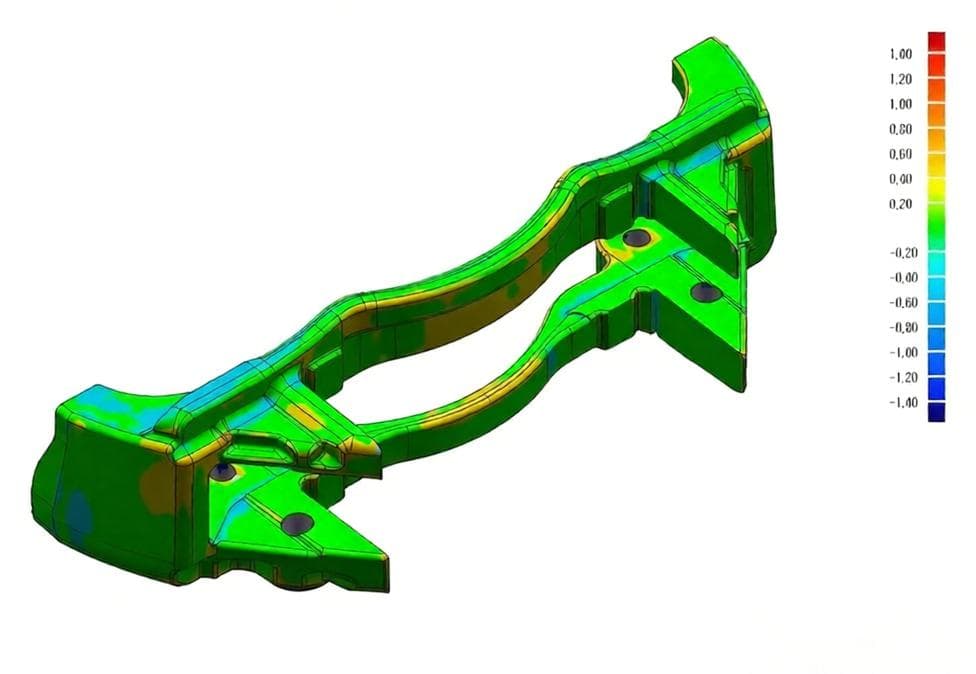
The final parametric CAD definition was compared across the full field against the original scan data using colour-map deviation analysis. The comparison verified the accuracy required for heavy-truck brake-part assembly, tool development and batch production.
- Green zone: ≤0.2 mm deviation across the main structure, assembly faces and holes
- Core machined surfaces: stable accuracy within ≤0.1 mm
- Complete CAD data package released for tooling, CNC and repeat production
The result
From discontinued calipers to manufacturing-ready data.
The recovered CAD package gave the customer a controlled route for brake-part assembly, tooling development and future batch production, rather than a one-time visual copy of an aged casting.
Deliverables
A standardised CAD package ready for production.
The customer received more than model data: reusable, traceable digital assets that allow similar caliper parts to be reviewed and produced from controlled CAD instead of relying on individual repair experience.
Standardised CAD files
Parametric models for the caliper cover plate and bracket base, with key dimensions, GD&T and machining datums retained for tooling and CNC use.
Full-dimensional inspection report
Colour-map deviation analysis supporting core machined-surface accuracy of ≤0.1 mm.
Customer feedback
“These calipers had been discontinued for years, and we were preparing to turn away the repair work. Mechonus gave us more than copied part data—they delivered CAD we can use directly for tooling. Now we can repair the trucks and produce our own spares.”Technical Lead, North American Heavy-Truck Repair Business
This case is based on an actual delivered project. Customer information and selected technical parameters have been anonymized. To discuss a similar reverse engineering project, submit your part information through our website and our engineering team will provide an initial assessment.
What this case demonstrates
Controlled reverse engineering for safety-critical castings.
The project combines large-casting scan capture, function-led parametric reconstruction and a production-ready CAD definition for commercial-vehicle brake parts.
Blind-zone scan capture
Even with a 400 × 300 × 170 mm cover, complex cavities and restricted scan access, the relevant geometry can be captured and repaired into a usable evidence set.
Design intent over casting noise
Wall thickness, assembly accuracy and structural strength guide reconstruction, separating foundry variation from the original functional geometry.
Production-ready CAD delivery
The resulting parameterised models can be used directly for tooling development, CNC machining and repeat replacement-part production.
Have a discontinued brake component?
Start with the physical part, its interfaces and its safety requirements.
Share photographs, dimensions, vehicle application information, mating-component details and required quantity. We will define the capture and reconstruction plan before data release.